e-Invoicing Is Already Mandatory — Interim Relaxation Until December 2027.
Phase 4 is active as of January 1, 2026. LHDN's interim relaxation period runs until December 31, 2027, but any single transaction above RM10,000 needs its own e-invoice and cannot go into a consolidated e-invoice. Bilaro ensures your procurement records are audit-ready today.
alarm Interim Relaxation Ends
* Bilaro facilitates internal record-keeping. Users must perform final LHDN filing via authorized middleware or official portals.
gavel Regulatory Disclaimer
Bilaro is a procurement automation tool designed to facilitate internal record-keeping and audit readiness. While Bilaro generates e-Invoice compatible data structures, users must perform final LHDN filing through an authorized MyInvois middleware or the official LHDN portal.
How Bilaro Prepares You
Automated Data Capture
Convert site POs and field receipts into structured digital entries instantly. No more manual entry errors that trigger LHDN audits.
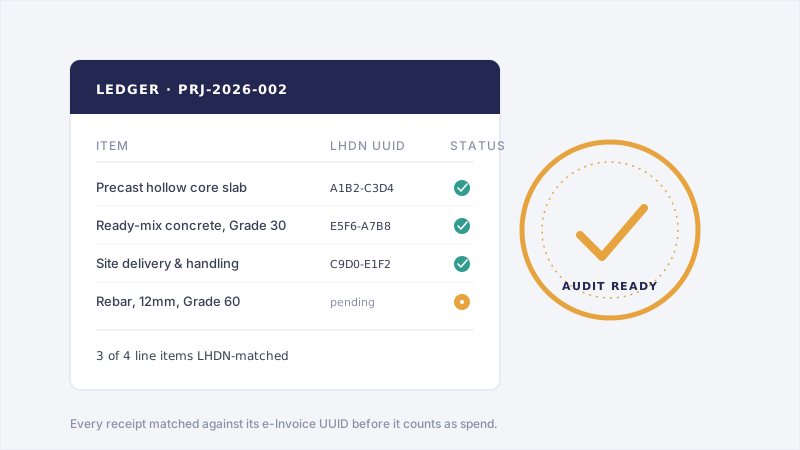
Unified Audit Trail
Every approval, "chop," and timestamp is preserved in a permanent ledger.
SME Readiness Checklist
Digital Inventory
Convert all physical stock ledgers to digital records for real-time cost tracking and tax liability forecasting.
Vendor Onboarding
Ensure your O&G sub-contractors are aware of the mandate and have provided valid e-Invoice data fields.
Policy Update
Update internal procurement policies to reject non-compliant invoices starting August 2027.
Frequently Asked Questions
LHDN e-Invoice Phase 4 is the final mandatory implementation stage of Malaysia’s Inland Revenue Board electronic invoicing initiative, enforcing digital transaction validation for the remaining businesses in scope (annual income or sales up to RM5 million; below RM3 million is exempt), including small and medium-sized enterprises (SME contractors, sub-contractors, and suppliers) across Malaysian infrastructure, construction, and oil and gas industries, with the compliance grace period ending December 31, 2027.
It replaces paper-based invoices with standardized electronic records that require real-time or consolidated validation against LHDN tax database standards.
The official LHDN e-Invoice Phase 4 interim relaxation period ends on December 31, 2027. From January 1, 2028, businesses in scope must meet LHDN's full e-Invoice requirements without the relaxation.
Infrastructure and construction companies must complete procurement workflow digitization before December 2027 to prevent audit disruption.
Mandatory LHDN e-Invoicing applies to Malaysian construction contractors, Oil & Gas vendors, sub-contractors, and material suppliers with annual revenue of RM3 million and above (Phase 4, in effect as of Jan 1, 2026). Businesses under RM3 million annual revenue may be exempt from mandatory e-Invoicing, unless operating as a subsidiary or related entity of a parent company subject to e-Invoicing mandates. Rules and thresholds are set by LHDN and may change — confirm your specific status directly with LHDN or your accountant.
Firms operating multi-site project requisitions must ensure field staff capture compliant vendor TIN data at the point of requisition.
Failure to comply with LHDN e-Invoice regulations by December 31, 2027, may result in statutory penalties and complications with tax filing — consult your accountant for specifics — as well as rejection of corporate tax expense deductions and administrative delays during annual corporate tax filing procedures.
Non-compliant purchase orders may also lead major clients and main contractors to reject vendor billing.
No, Bilaro does not file e-Invoices directly with LHDN nor does it replace the official MyInvois portal or authorized middleware. Bilaro is an internal procurement automation and record-keeping system that prepares and structures purchase orders, delivery notes, and vendor TIN data to make your records e-Invoice audit-ready prior to submission.
Final e-Invoice submission to LHDN must be executed through authorized MyInvois middleware or the official government tax portal.
No. Under LHDN's guideline, any single transaction above RM10,000 must have its own e-invoice and cannot be included in a consolidated e-invoice. This has applied since January 1, 2026, during the interim relaxation period.
Contractors with a single transaction above RM10,000 need an individual e-invoice now, without waiting for the relaxation period to end in December 2027.
Ready for the 2027 Audit?
Don't wait for the rush.